
No Gatekeeping: with Sara Henkins
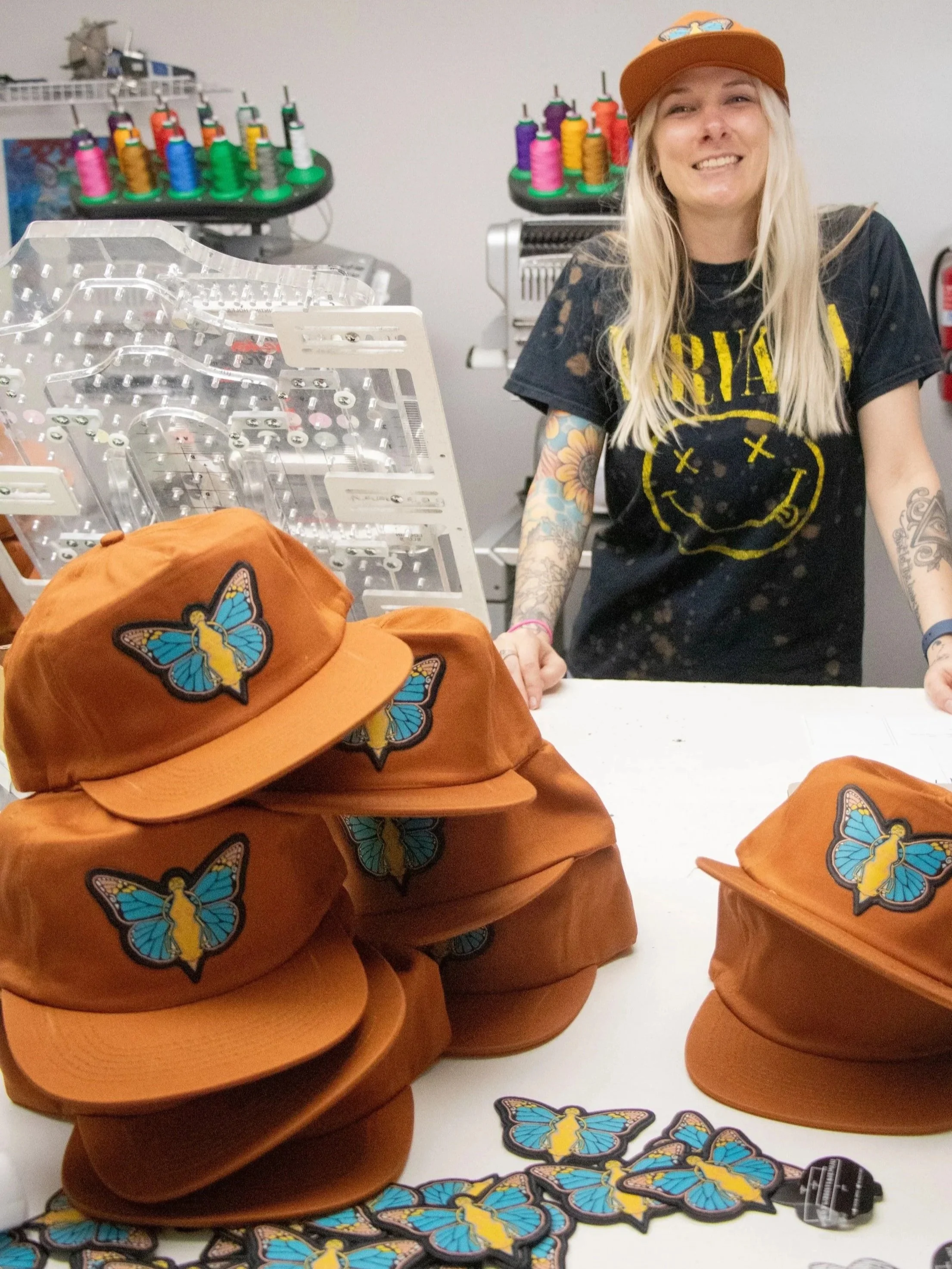
Business owners tend to tell their origin stories and love to make it sound polished.
But sometimes the real story is: You learn a skill, realize someone is charging way too much for the opportunity you want, and decide you’re perfectly capable of doing it yourself. That’s how Sara Henkins started A Stitch in Time Company.
Today’s No Gatekeeping feature is with Sara Henkins, owner of A Stitch in Time Company and TwoSixTwo Apparel, a business that started in Dillon, Colorado, and has recently relocated to Elkhorn, Wisconsin. In the middle of that move? Just a small life event. Like having a baby. Because rebuilding a business from scratch in a new state wasn’t ambitious enough.
Sara didn’t set out to become an apparel business owner.
Like a lot of small business stories, it started with a job. Back in 2014, she was hired as a store manager at the classic store, Lids. The corporate structure? Not exactly her vibe. But the embroidery machine? That was the spark of inspiration.
After leaving that role, she went on to work at an embroidery shop in Dillon, Colorado, a small Summit County town where community support for local businesses runs deep. The owner of the shop lived hours away and was nearing retirement, which meant Sara essentially ran the entire shop. Naturally, when the business went up for sale, she was interested. There was just one problem. “He overpriced the shit out of it.” So Sara did what any rational future entrepreneur would do. She gave him the option to sell it to her at a reasonable price…or she’d start her own business and become the competition.
In 2017, A Stitch in Time Company was born.
Sara now runs two brands: TwoSixTwo Apparel, focused primarily on uniforms and apparel for businesses. And A Stitch in Time Company that creates merchandise for musicians and creative artists. Which means if you’ve ever seen a perfectly embroidered jacket, band merch, or custom gear that makes you think “that looks legit” there’s a decent chance someone like Sara made it happen.
Before motherhood entered the chat, Sara’s schedule looked like what many solo business owners know all too well: Grinding. Constantly. “Some weeks I worked six days a week. Some weeks I worked 10–12 hour days.” Production never stopped. Orders stacked up so fast that during busy seasons she could be two months booked out. Because when you're the only person who knows how to run the machines, every single order flows through you. Her dad helped with administrative work and part-timers occasionally jumped in to trim threads or help with smaller tasks. But the production? That was Sara. And when you're paid based on what you produce, slowing down isn't exactly an option.
Then life changed (a lot).
About a year ago, Sara and her husband made a big decision to leave Summit County, Colorado, a place they loved, for Wisconsin. The reason? A few things. The cost of living. Like many people who’ve tried to build a life in mountain towns (myself included), they reached the frustrating realization that no matter how hard they worked, buying a home there just wasn’t realistic. They wanted space. They wanted stability. They wanted a place to raise a family. And they wanted their future kid to actually know their extended family. So they moved. And then… one month later…They found out they were pregnant.
Today, Sara runs her business a little differently.
Instead of a storefront, her workspace is currently in her basement. And her schedule? It depends heavily on nap time. “Now it's squeezing in whatever time I can between his naps.” Instead of working 12-hour production days, she's navigating the reality of being a full-time mom with a part-time business.
But the challenge goes beyond time. Moving meant losing 90% of her client base. Which means she’s not just running a business right now. She’s rebuilding one. In a new community. With a newborn. And no built-in network yet. If you’ve ever had to rebuild momentum in business, you know how heavy that can feel. In Summit County, Sarah had something incredibly valuable: Community. People supported local businesses. Word of mouth worked. Her name carried weight. In Wisconsin? She’s starting from square one. “You don't just show up and suddenly have a new community. You have to meet people and build that support again.” It’s a reminder that business isn’t just about skill. It’s also about roots. And sometimes the hardest part isn’t doing the work. It’s rebuilding the ecosystem around it.
Despite the grind, there are moments that remind Sara exactly why she started.
One of her favorites? Seeing her work out in the wild. At ski resorts. At breweries. On jackets. On merch racks. One of her biggest projects was producing thousands of retail pieces for Arapahoe Basin. Meaning she could walk into the store and casually think: Yep. I made all of that. She’s also created jackets for Team Summit, which meant watching athletes wear pieces she produced in competitions, some of whom eventually go on to compete at the Olympic level. And then there’s the work she does with smaller artists and producers. Helping creatives build merch for their brand. Small business helping small business. Which is honestly the best kind of ecosystem.

One thing Sara wishes people understood more about custom apparel businesses? The price tag.
When someone says a hat or jacket is expensive, it’s easy to assume markup. But the reality looks more like: subscriptions, equipment, maintenance, website fees, accounting software, taxes, supplies, shipping, time. So when someone buys something from her business? It’s not just a purchase. “You're basically putting food on my table… and now food in my son's mouth.” Small businesses aren't giant corporations absorbing costs. They're real people making it work.
So what advice does Sara wish someone had told her when she started? “It's going to get hard. Really hard.” Social media can make entrepreneurship look like a perfectly aesthetic highlight reel. Cute packaging. Perfect branding. Quick success stories. But the reality? “There are a lot of peaks and valleys.” And those valleys can make you question everything. Including whether you should just throw in the towel and get a “real job.” But if you keep going, those peaks start to matter even more.
After everything, the move, the pregnancy, the rebuilding, the exhaustion, Sara’s biggest point of pride isn’t a specific project, it’s that she stuck with it. Even when it would’ve been easier not to. “This year has definitely tested me… but I'm sticking with it. I know I'm good at it.” And honestly? That might be the most accurate definition of entrepreneurship there is.

Running a business doesn’t always look like scaling teams and big launches. Sometimes it looks like a basement workspace, a baby monitor next to your laptop, and doing what you can with the time you have. Sara’s story is a reminder that resilience is a business skill. And sometimes the biggest success isn’t explosive growth. It’s continuing anyway!
Want to cheer on A Stitch in Time & TwoSixTwo Apparel? Follow along their socials, order a piece of merch, and be part of supporting a family in small business.
Websites:
A Stitch in Time (merch for creatives in the music and arts community)
TwoSixTwoApparel (uniforms and Wisconsin branded retail wear)
Socials: